
Thyroid
Your thyroid creates and produces hormones that play a role in many different systems throughout your body.
- Home
- Service
- General medicine
- Thyroid
Thyroid Disease
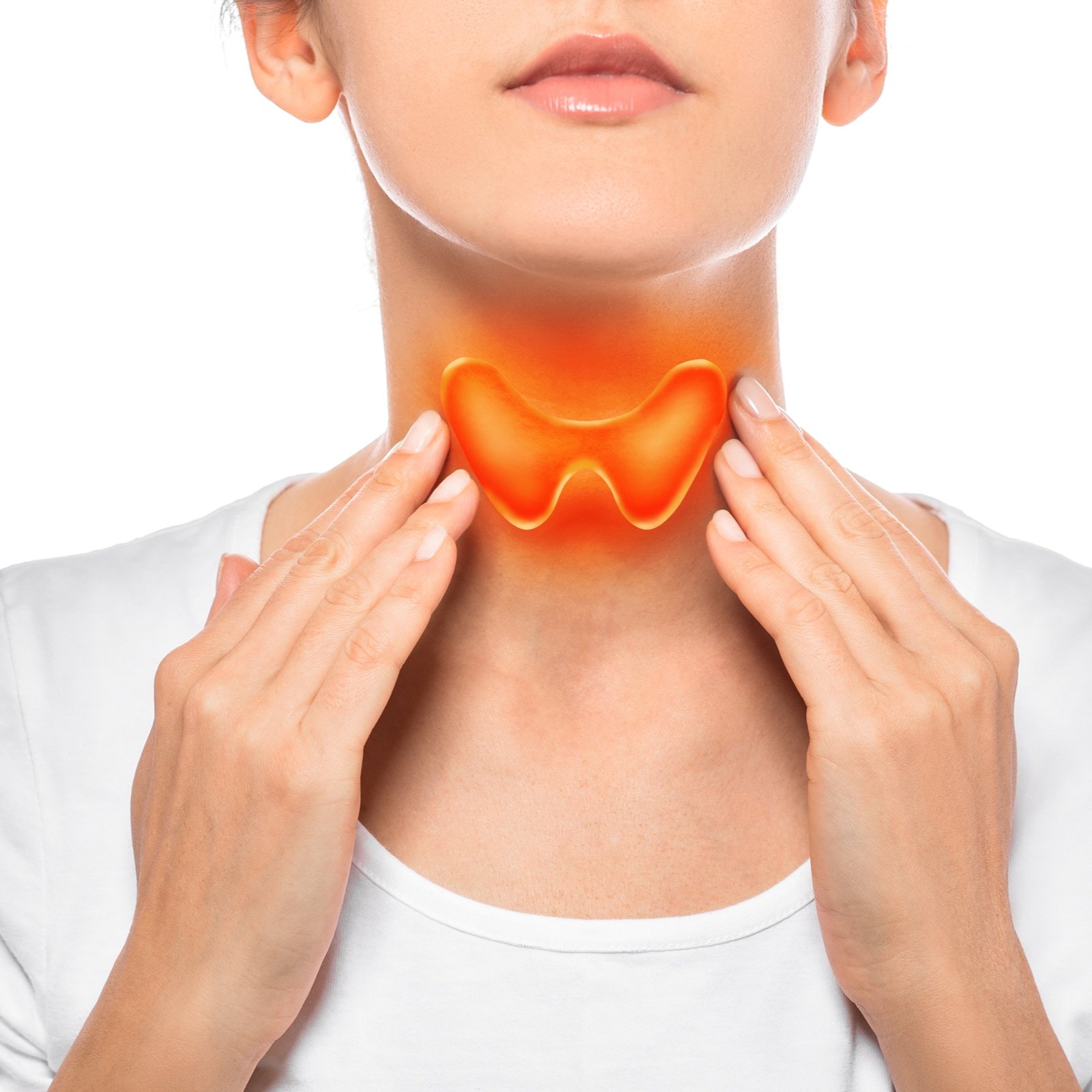
The thyroid gland is a small organ that’s located in the front of the neck, wrapped around the windpipe (trachea). It’s shaped like a butterfly, smaller in the middle with two wide wings that extend around the side of your throat. The thyroid is a gland. You have glands throughout your body, where they create and release substances that help your body do a specific thing. Your thyroid makes hormones that help control many vital functions of your body.
When your thyroid doesn’t work properly, it can impact your entire body. If your body makes too much thyroid hormone, you can develop a condition called hyperthyroidism. If your body makes too little thyroid hormone, it’s called hypothyroidism. Both conditions are serious and need to be treated by your healthcare provider.
What causes thyroid disease?
- Thyroiditis: This condition is an inflammation (swelling) of the thyroid gland. Thyroiditis can lower the amount of hormones your thyroid produces.
- Hashimoto’s thyroiditis: A painless disease, Hashimoto’s thyroiditis is an autoimmune condition where the body’s cells attack and damage the thyroid. This is an inherited condition.
- Postpartum thyroiditis: This condition occurs in 5% to 9% of women after childbirth. It’s usually a temporary condition.
- Postpartum thyroiditis: This condition occurs in 5% to 9% of women after childbirth. It’s usually a temporary condition.
- A non-functioning thyroid gland: Sometimes, the thyroid gland doesn’t work correctly from birth. This affects about 1 in 4,000 newborns. If left untreated, the child could have both physical and mental issues in the future. All newborns are given a screening blood test in the hospital to check their thyroid function.
Conditions that can cause hyperthyroidism include:
- Graves disease: In this condition the entire thyroid gland might be overactive and produce too much hormone. This problem is also called diffuse toxic goiter (enlarged thyroid gland).
- Nodules: Hyperthyroidism can be caused by nodules that are overactive within the thyroid. A single nodule is called toxic autonomously functioning thyroid nodule, while a gland with several nodules is called a toxic multi-nodular goiter.
- Thyroiditis: This disorder can be either painful or not felt at all. In thyroiditis, the thyroid releases hormones that were stored there. This can last for a few weeks or months.
- Excessive iodine: When you have too much iodine (the mineral that is used to make thyroid hormones) in your body, the thyroid makes more thyroid hormones than it needs. Excessive iodine can be found in some medications (amiodarone, a heart medication) and cough syrups.
Emergency?
Call Us for Emergency
9980974288
Book Appointment

Our Testimonial
Excellent experience..She treat each & every patient like her family member & take care of them from starting stage of pregenency to till delivery..Words are lesser for her appreciation.
